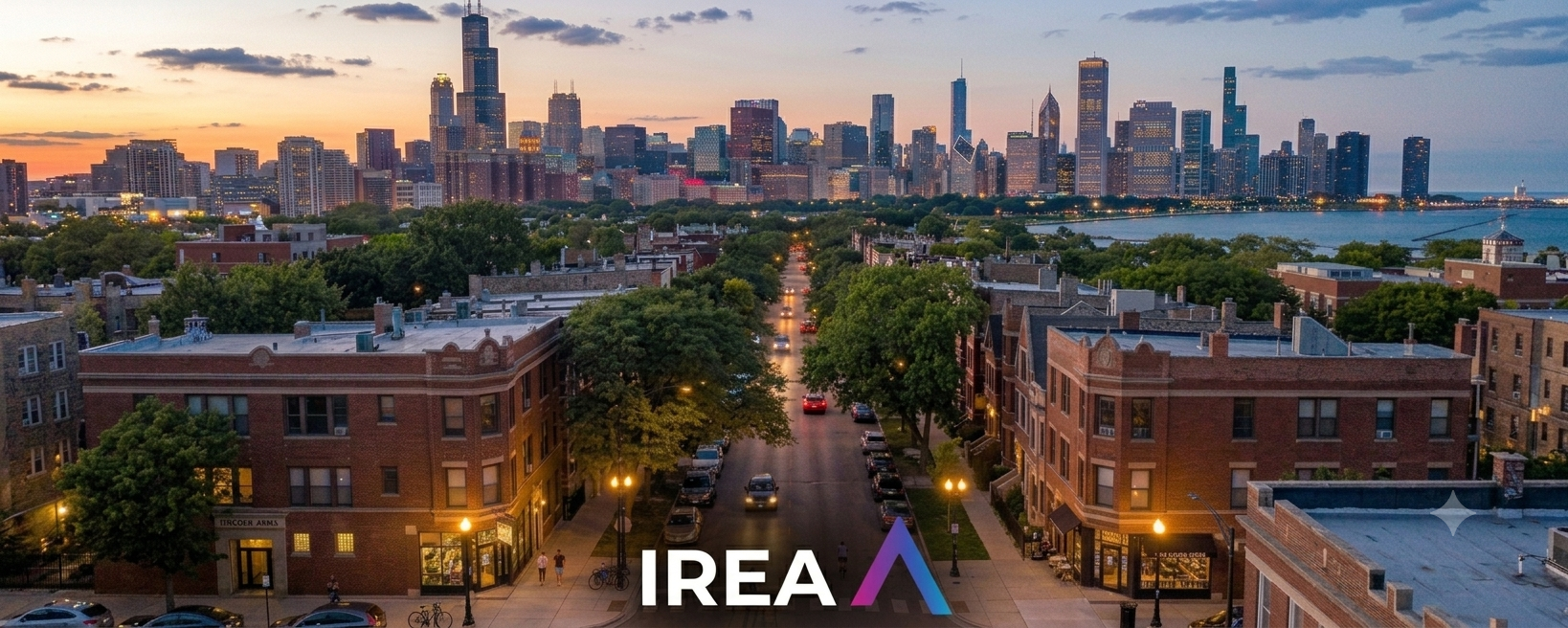
Redefining the Chicago Footprint: River North | IREA
Executive Summary
"Leaving downtown Chicago? Discover why renters are moving out of River North and how Insight Real Estate Advisors (IREA) helps you locate the perfect micro-market near Chicago. "
Market Signals
- Chicago Real Estate Market
- Sell Your Property
- Moving out of River North
- Insight Real Estate Advisors
- Chicago Realty
Key Metrics
Full Analysis
Moving Out of River North? Find Your Next Chicago Neighborhood with IREA
For the last two decades, River North has been the undisputed poster child for Chicago’s high-density, high-energy luxury lifestyle. Driven by soaring glass towers, Michelin-starred dining, and immediate proximity to the Loop, it became the default destination for young professionals, corporate transferees, and those wanting a front-row seat to the city’s concrete playground.
But look closely at the moving trucks lining LaSalle and Orleans streets lately, and a clear shift emerges.
The downtown luxury rental landscape is experiencing a profound recalibration. The unilateral pull of the central business district has weakened, and renters who once prioritized a five-minute walk to the office are actively packing their bags.
Here is an analytical look at why residents are leaving River North, where they are going, and how Insight Real Estate Advisors (IREA) helps individuals strategically navigate this massive neighborhood transition.
The Catalyst: Why the Allure of River North is Fading
The mass exodus from primary downtown locations like River North isn't a symptom of people leaving Chicago altogether; rather, it’s a symptom of people outgrowing what River North offers. Several systemic shifts have accelerated this migration:
1. The Death of the "Five-Day In-Office" Premium
When the five-day corporate commute was mandatory, paying a premium to live three blocks from your desk made financial and logistical sense. Today, with remote and hybrid work schedules firmly institutionalized, paying top-of-market rental rates just to look at your office building from a balcony feels like a misallocation of capital. Renters are realizing that if they only commute two days a week, they can expand their geographical horizons significantly.
2. The Search for Square Footage and "Work-From-Home" Space
River North’s architectural blueprint favors high-density micro-units and tightly packed one-bedroom floor plans. When your home doubles as your primary office, a 650-square-foot apartment feels claustrophobic. Renters are craving dedicated dens, true dining spaces, and separate home offices—spatial luxury that is either cost-prohibitive or physically unavailable in downtown’s vertical high-rises.
3. The Shift from "Nightlife" to "Neighborhood Culture"
River North is famously loud, vibrant, and commercial. While a 24-year-old might thrive on the energy of Hub 51 and late-night traffic, a slightly more mature demographic finds itself craving tree-lined streets, independent coffee shops, neighborhood block parties, and true green space. The desire for an authentic, community-centric environment is outpacing the desire for commercial nightlife hubs.
4. The Rising Real Costs of Downtown Living
It isn’t just base rent that pinches the wallet in River North; it's the compounding cost of everyday life. From mandatory garage parking to inflated grocery prices at neighborhood express markets, the total cost of occupancy is staggering. Renters have realized their dollar stretches substantially further just a few miles away.
Where is the Capital Moving? The Rise of the Micro-Markets
As renters exit the primary downtown grid, they are migrating toward specialized neighborhoods that offer distinct micro-cultures and superior spatial value. We are seeing a heavy influx of former River North residents moving to:
- The West Loop & Fulton Market: Still urban and high-density, but offering a distinct industrial-chic aesthetic, a global tech-hub corporate landscape, and arguably the best culinary scene in the Midwest.
- Lincoln Park & Lakeview: For those seeking immediate access to the lakefront, expansive parks, historic brownstones, and a quieter, deeply established neighborhood feel without sacrificing a quick CTA commute.
- Logan Square & Wicker Park: Attracting individuals who prioritize independent arts, locally owned retail, expansive parkways, and a diverse, community-driven social fabric.
- The Surrounding Counties (Cook, DuPage, Lake, Kendall): For a segment of renters looking to exit the city entirely, transitioning to high-end suburban micro-hubs that boast excellent transit connectivity and expansive square footage.
How IREA Helps You Find Your True North
Moving out of a default neighborhood like River North can feel overwhelming. When the entire Chicago grid opens up, how do you filter through the noise to find the exact street, building, or block that aligns with your lifestyle?
This is exactly where Insight Real Estate Advisors (IREA) steps in. We don't just pull automated listings from a database; we act as your strategic real estate partner.
Data-Driven Property & Lifestyle Matching
We look past the superficial aesthetic of a rental unit to analyze how it fits into your daily life. Our advisory process starts with a deep dive into your lifestyle metrics: How many days a week do you work from home? What are your commuting boundaries? What type of neighborhood density makes you feel comfortable? We match your lifestyle data against Chicago's changing rental landscape to pinpoint neighborhoods you may have completely overlooked.
Unlocking Off-Market and Institutional Opportunities
The Chicago rental and acquisition markets move incredibly fast, and the best spaces rarely sit on public listing sites. Through our deep commercial and residential networks, IREA has direct line-of-sight into upcoming unit vacancies, corporate lease breaks, and newly constructed boutique buildings before they hit the open market.
Total Cost of Occupancy Transparency
A cheaper base rent can quickly be eroded by hidden utility structures, parking fees, or lengthy commute costs. At IREA, we provide a comprehensive cost-of-occupancy breakdown for every property we review. We negotiate directly with institutional landlords and private owners on your behalf, ensuring concessions (like free rent months, waived amenity fees, or reduced parking costs) are heavily leveraged in your favor.
Frequently Asked Questions
Why are people moving away from River North?
Many residents are leaving River North due to the rise of hybrid work, which eliminates the need to live right next to downtown offices. Additionally, renters are looking for more spacious work-from-home layouts, quieter residential neighborhoods, and a lower total cost of occupancy.
What neighborhoods are people choosing instead of River North?
Popular alternatives include the West Loop and Fulton Market for a modern culinary and tech hub vibe; Lincoln Park and Lakeview for historic charm, lake access, and green space; and Logan Square or neighboring Chicago counties (Cook, DuPage, Lake, Kendall) for more space and community-driven cultures.
How does IREA help me find a neighborhood that works for me?
Insight Real Estate Advisors (IREA) utilizes a data-driven process that matches your specific lifestyle metrics (like hybrid work schedules and space needs) with targeted local micro-markets. We provide access to off-market inventory and analyze the complete cost of occupancy to save you time and money.